
BACKGROUND
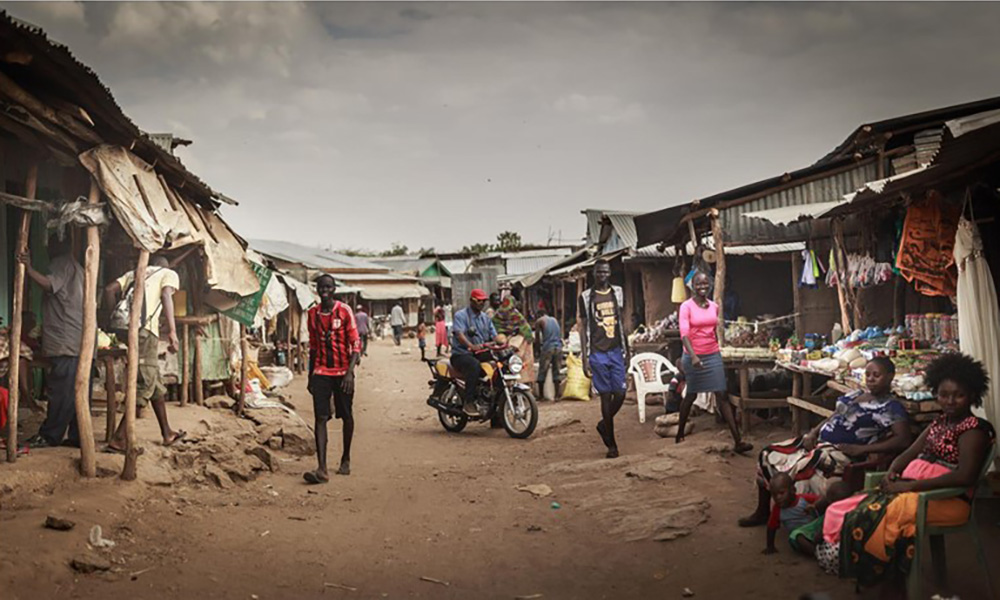
Turkana County remains economically, politically and socially marginalized from the main markets and population centres and with poor infrastructure provision, despite decades of development assistance. The economy is principally reliant on pastoralism and many refugees in Kakuma camp are better off than their Turkana hosts in an area with limited access to educational facilities and even fewer opportunities for post primary or alternative education for youth. Existing skill development initiatives are mainly built around a limited number of trainings not adjusted to the local context and target population. Men have greater liberty of movement than women, and therefore better access to information and social networks thus livelihood opportunities.
Guided by the Comprehensive Refugee Response Framework (CRRF) and Kalobeyei Integrated Socio-Economic Development Plan (KISEDP), WUSC is seeking to increase the empowerment of adolescent girls and young women in Kalobeyei Settlement, Kakuma Refugee Camp, and the surrounding host communities in Turkana County, Kenya. Against this backdrop, the World University Service of Canada (WUSC) commissioned a labour market assessment of employment opportunities which might potentially be available to refugee young women in Kalobeyei Kakuma Refugee Camp and host community.
The Rapid Labour Market Assessment employed a vigorous approach suitable for the scope of the project, available resources and intended audience. The survey adopted both qualitative and quantitative methods to collect and analyse data from both primary and secondary sources. Triangulation (of important findings) and a gender sensitive approach were adopted and was participatory. The data collection methods included a desk review, key informant interviews / structured individual interviews, observations and focus group discussions. Quantitative data was analysed using descriptive statistics including proportions, percentages and means. Content analysis and other appropriate qualitative data analysis procedures were used to analyze qualitative data generated from documents, FGDs and KIIs.
Duration: MAY 2020