
Project Background
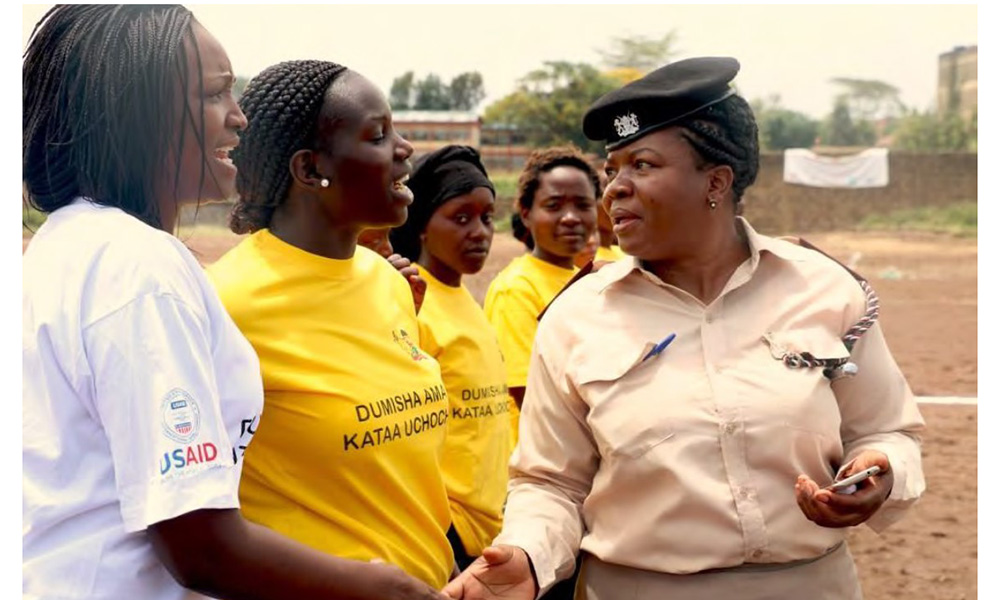
Kenya has a long history of ethnic conflict centered on access to resources such as land and political power.5 Politicians use ethnicity in particular to produce, direct and support conflict to sustain their rule, promote their economic advancement and draw attention away from issues that threaten their position.6 Through KTU, USAID/KEA supported activities aimed at strengthening community cohesion and increasing civic awareness, particularly among youth, of the new constitution to empower informal settlement inhabitants to make informed, non-ethnically charged decisions and create opportunities for increased incomes.
USAID/KEA’s goal behind KTU was to strengthen Nairobi’s informal communities to withstand the political manipulation that leads to violent conflict. In eight Nairobi informal settlements and Eastleigh, KTU
aimed to develop strong inter-community relationships around shared interests, ensuring an informed and engaged population. KTU therefore leveraged the 2010 Constitution of Kenya, which gives meaning to
national values based on human dignity, expands the range of human rights available to citizens, particularly the most vulnerable groups, decentralizes decision-making authority, and sets in motion mechanisms for addressing citizen grievances. To achieve this, KTU focused on strengthening national, county and grassroots peace-building networks.7
Project done in September 2016.